

Key Highlights
- The transition from preschool play to formal primary education requires a gentle cognitive shift.
- Abstract mathematical concepts become accessible when rooted in concrete, relatable experiences.
- Engaging in P1 math tuition can provide the structured environment needed to prevent early learning gaps.
- Primary math tuition in Singapore serves as a proactive way to build lasting academic confidence.
- Consistent encouragement helps children view mathematics as an approachable tool rather than a challenge.
Introduction
The first year of primary school marks a significant milestone in a child’s life. It is the moment when the world of unstructured play begins to overlap with the structured demands of a formal curriculum. For many parents, the challenge lies in watching their child navigate the move from concrete, play-based learning to the abstract world of primary school mathematics, which is why some opt for P1 math tuition or online tutoring. This transition is not merely about learning numbers; it is about changing how a child perceives the world around them.
Mathematics at this age is often perceived by children as a set of rules to memorise. However, when we strip away the pressure of performance and focus on the logic behind the numbers, we open the door to a deeper understanding. Navigating this change successfully requires patience, the right resources, and an appreciation for the developmental stage your child is currently experiencing.
The Cognitive Shift: From Concrete to Abstract
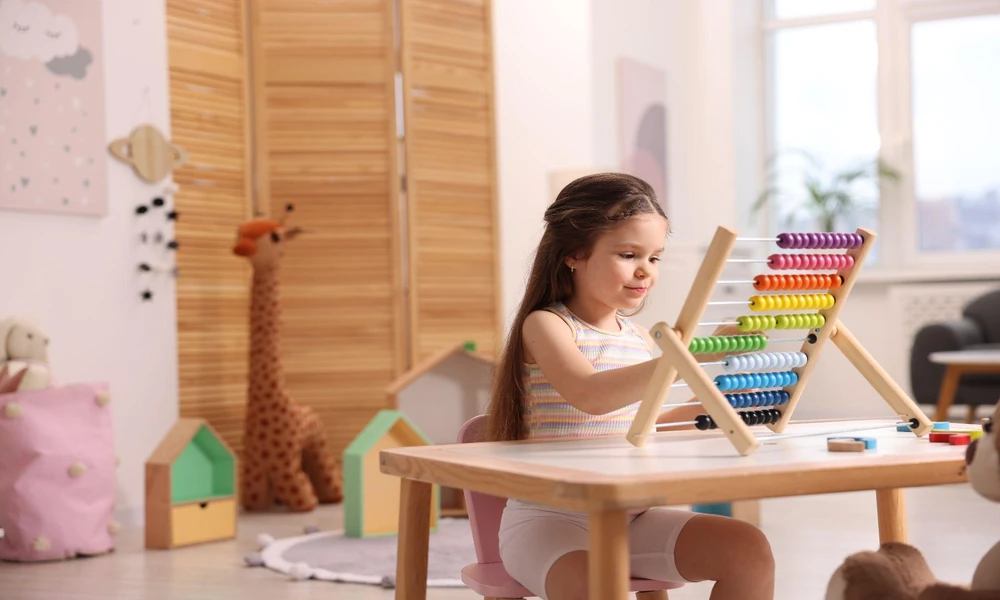
During the early years, children learn through their senses. They stack blocks to understand height, share sweets to understand division, and count steps to grasp addition. This concrete phase is essential for cognitive development. When children enter the primary school system, the curriculum introduces symbols and formal structures that represent these real-world interactions.
This leap can be jarring for some learners. A child who can easily share four grapes with a friend may suddenly struggle when presented with a worksheet asking them to solve four minus two. The challenge is not in the maths itself but in the abstraction. To bridge this gap, parents should continue to relate mathematical symbols back to physical items whenever possible. By maintaining that link between the tangible and the symbolic, you help the child build a scaffold for their learning, making the abstract feel less intimidating and more intuitive.
The Role of Structured Support
As the syllabus advances, the volume of topics increases. This is often where children start to feel the pressure. Engaging in P1 math tuition can provide the structured environment needed to help children bridge the gap between their home-based play and the rigorous requirements of the classroom. A well-structured programme does not just teach children how to answer questions; it teaches them the logic behind the concepts.
When children have access to professional guidance, they are less likely to develop common misconceptions that can hinder their progress in later years. The benefit of early support is that it addresses potential anxieties before they become deeply rooted. By reinforcing the basics in a controlled setting, children gain the stability they need to tackle increasingly complex topics as they progress through their primary school education.
Building Confidence in a New Environment
Confidence is the silent partner of competence in mathematics. When a child approaches a problem with a sense of capability, they are more likely to persevere through difficult tasks. Seeking out primary math tuition in Singapore allows students to work at their own pace in an environment that celebrates progress rather than just perfection. This approach helps to foster a growth mindset where mistakes are viewed as learning opportunities rather than failures.
Parents can support this by celebrating the process of solving a problem rather than just the final answer. Ask your child to explain how they reached their result. This verbalisation forces them to internalise their reasoning and makes the abstract process visible. Encouraging this habit early on creates a foundation for mathematical communication that will serve them well throughout their entire academic journey.
Sustaining Interest and Curiosity
The most effective way to sustain interest is to keep mathematics relevant to their daily activities. Whether it is calculating the time until their favourite television show starts or managing their pocket money for a small treat, mathematics exists in the fabric of their everyday lives. By highlighting these moments, you transform maths from a school subject into a useful life skill.
As your child advances, continue to foster this curiosity. Avoid turning maths into a chore. If your child finds a particular topic challenging, take a step back and use physical objects to re-enforce the concept. The objective is to keep the spark of curiosity alive, ensuring they remain engaged even when the material becomes more demanding.
Conclusion
Guiding your child through their first year of primary school is a collaborative effort between home and school. By understanding the shift from play to abstraction and providing the necessary support, you ensure your child feels secure and confident. Mathematics should be a source of wonder and empowerment, not stress. With the right encouragement and the occasional boost from external support, your child can navigate their formative years with ease and success.
If you are looking for dedicated support to help your child excel, we are here to help. Reach out to Supermath today to learn how our tailored programmes can support your child’s educational journey. We are committed to fostering a love for learning and building the strong foundations your child needs for long-term success.
