
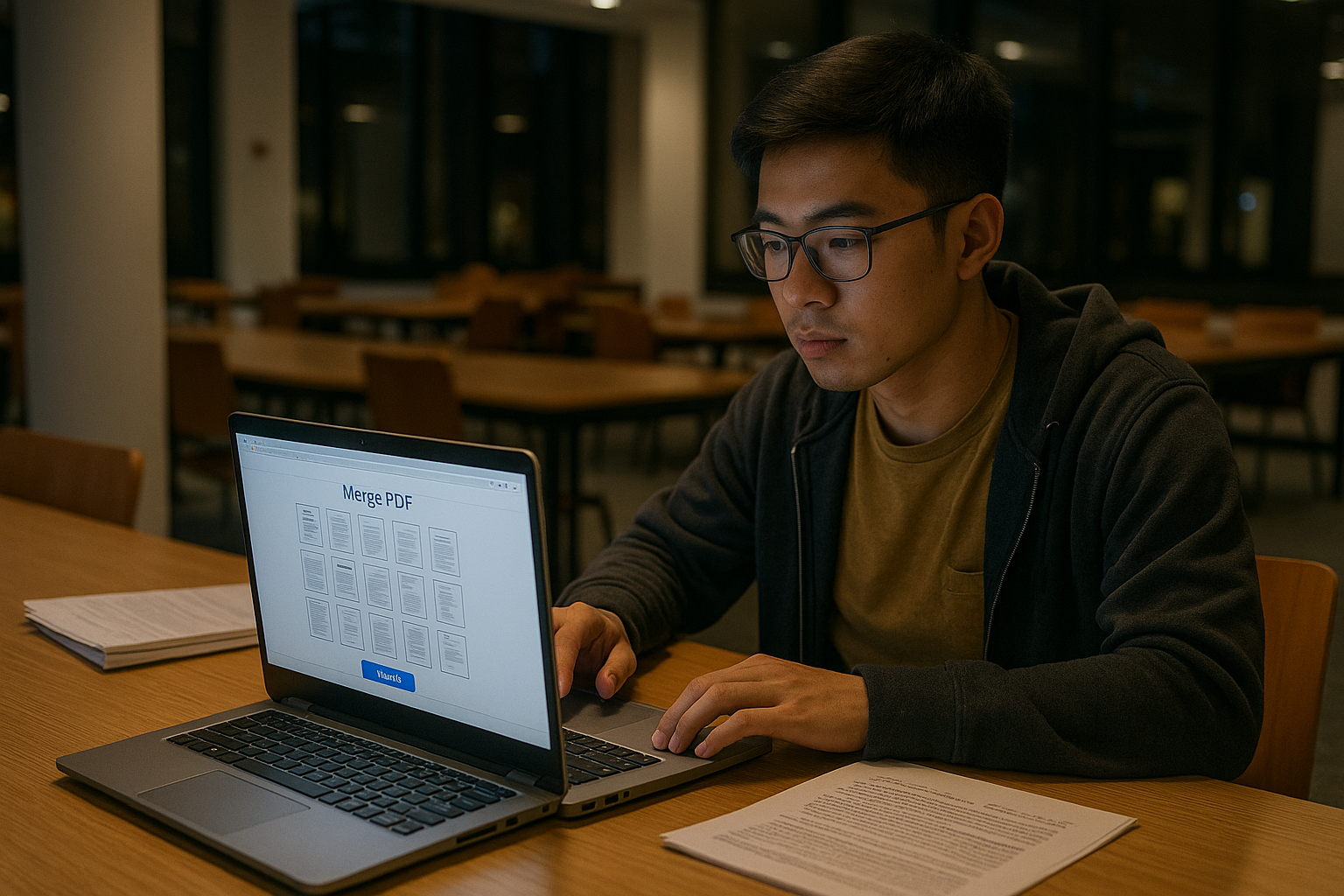
Location: Tempe, Arizona – Arizona State University
Student: Michael Tran, 19, sophomore in Political Science
Course: POS 301 – Political Ideologies & American Government
Deadline: 11:59 PM, Sunday night
1. The Sunday Night Panic Begins
On a quiet Sunday night at 11:30 PM, Michael Tran sat on the second floor of Hayden Library at Arizona State University. The building was almost empty. His group project was finished—at least in theory—but the files were a mess.
There were 12 separate documents from four different group members:
- PDF summaries
- Word documents
- Screenshots of charts
- Smartphone photos
- Google Docs exports
- Multiple versions of the same case study
When Michael opened Canvas, he read the line that made his heart drop:
“Upload ONE PDF file. ZIP files not accepted.”
He checked the clock. He had just 29 minutes before the deadline.
2. The Assignment That Led to the Chaos
For POS 301, each student in Michael’s group had to provide:
- One ideology summary
- One real-world case study
- One data chart
- One reflection paragraph
This created a cluttered folder with filenames like:
summary_michael.pdfsummary_anna.docxcase_julia_final_final.pdfdatachart1.pngchart_michael.jpegreference_list_brandon.gdoc
The professor’s instructions were clear: submit one clean, well-ordered PDF file.
3. Michael’s Failed Attempts
Attempt #1 – Google Docs Export
Michael first tried copying and pasting everything into a single Google Doc and exporting it as a PDF. The result was disappointing: the formatting was scrambled, spacing was inconsistent, and the charts looked blurry.
Time lost: 12 minutes.
Attempt #2 – Desktop Software
Next, he tried to use Adobe Acrobat, only to realize that his student trial had expired last semester. Upgrading or installing anything new at 11:45 PM was not an option.
Time lost: 3 more minutes.
Time remaining: 14 minutes.
4. The Only Realistic Solution: An Online Merge Tool
Michael remembered a friend’s advice from earlier in the semester:
“Just use an online merge tool, it’s way faster.”
He opened https://pdfmigo.com and uploaded all 12 files. The tool automatically:
- Converted Word documents into PDF pages
- Converted JPG and PNG images into individual PDF pages
- Placed everything into a single combined document
- Compressed the final file so Canvas would accept it
Michael then dragged the thumbnails to put everything in the correct order:
- Ideology summaries
- Case studies
- Data charts
- Reflection
- References
He clicked the button to Merge PDF and waited a few seconds.
The result: a 52-page PDF file, about 9.4 MB in size.
Time left: 4 minutes.
5. Submitting to Canvas
Michael downloaded the merged file, renamed it POS301_Final_Group_Project.pdf, and uploaded it to Canvas. The progress bar spun for a moment, and then the submission was accepted at 11:57 PM—just two minutes before the deadline.
He leaned back in his chair and finally exhaled. The crisis was over.
6. What Michael’s Story Says About College Life Today
Michael’s late-night scramble at ASU highlights several realities of modern college life:
Group Projects Create File Chaos
Each student uses different tools, file formats, and naming conventions.
Learning Platforms Prefer a Single PDF
Canvas and similar systems make students combine everything into one file.
Not Every Student Has Paid Software
Online tools fill the gap when Adobe Acrobat isn’t available.
Late-Night Submissions Are Normal
Most student submissions happen between 10 PM and 1 AM on Sundays.
File Size Limits Matter
Automatic compression ensures that uploaded files won’t be rejected.
7. Why This Makes a Strong Deep-Research Topic
Michael’s experience reflects:
- The digital habits of American college students
- The technological challenges of group assignments
- The growing dependency on browser-based tools
- The role of document management in academic performance
Behind every merged PDF at 11:57 PM is a student trying to balance deadlines, technology, and limited time.